Skip to content
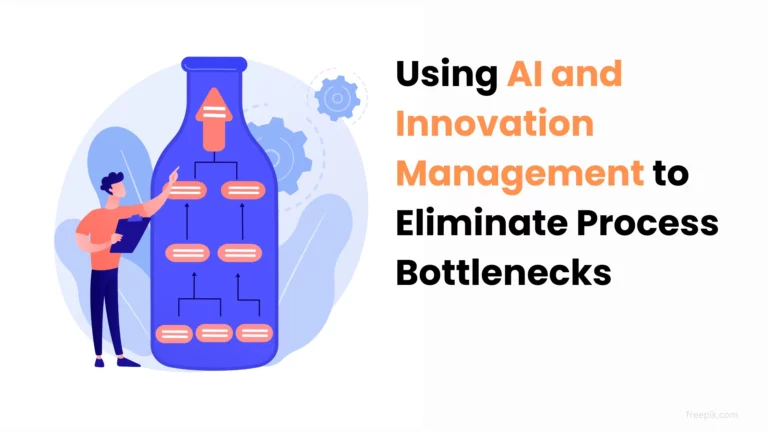
A pharmaceutical R&D Director recently shared a frustrating reality: her team generates 200+ ideas per quarter, but it takes an average of six weeks just to get through initial evaluation. Not because the ideas are complex. Because the evaluation process itself has become a bottleneck.
Her IP attorneys spend hours manually searching prior art for each disclosure. Her review committees schedule meetings three weeks out because everyone’s calendar is packed. Her engineers resubmit the same information multiple times because different stakeholders use different systems.
Sound like your innovation pipeline?
Here’s what’s happening: while your teams are capable of generating breakthrough ideas quickly, your processes for managing those ideas haven’t kept pace. The result? Innovation bottlenecks that have nothing to do with technical complexity and everything to do with workflow inefficiency.
The good news? AI and innovation management are finally addressing these operational challenges directly.
Where Innovation Processes Actually Break Down
Most R&D Directors focus on generating more ideas, assuming that’s where innovation happens. But the real bottlenecks occur after idea submission, in the evaluation and development phases.
Consider these common scenarios:
- The Prior Art Search Bottleneck: Every patent disclosure requires comprehensive prior art research. IP attorneys spend 4-6 hours per search, creating weeks-long backlogs. Meanwhile, inventors wait to learn if their ideas have potential, often losing momentum entirely.
- The Cross-Team Communication Maze: Good ideas need input from multiple stakeholders. Legal needs to assess IP potential. Business development needs to evaluate market fit. Engineering needs to review technical feasibility. But coordinating this feedback through email and meetings can stretch simple evaluations into month-long processes.
- The Decision-Making Delay: Review committees meet monthly to evaluate accumulated ideas. By the time decisions get made, inventors have moved on to other projects, and market conditions may have shifted.
These aren’t technical problems. They’re process efficiency problems. And that’s exactly where AI in innovation management can make an immediate impact.
How AI and Innovation Solutions Eliminate Specific Bottlenecks
The most effective applications of AI and innovation aren’t about replacing human judgment. They’re about eliminating the administrative friction that slows down human decision-making.
Accelerating Prior Art Research
Traditional prior art searches require IP attorneys to manually query patent databases, read through hundreds of results, and synthesize findings into actionable reports. This process can take days per disclosure.
AI in innovation management platforms changes this entirely. AI-powered prior art tools can scan relevant patent databases in minutes, identify the most pertinent existing patents, and highlight potential conflicts or opportunities.
IP Assist integrates this capability directly into the disclosure workflow, so prior art insights are available immediately when evaluation teams need them.
Real impact: Instead of waiting weeks for prior art clearance, inventors get initial feedback within hours of submission.
Streamlining Cross-Functional Evaluation
The traditional approach to gathering stakeholder input involves scheduling meetings, circulating documents, and manually consolidating feedback from multiple sources. This coordination overhead often takes longer than the actual evaluation.
AI and innovation management platforms solve this by creating structured workflows where each stakeholder provides input at designated stages. Automated notifications ensure timely feedback, while centralized documentation eliminates information loss between handoffs.
Idea Assist includes these workflow capabilities, allowing R&D Directors to define custom evaluation stages that match their organization’s specific needs while ensuring nothing falls through the cracks.
Reducing Evaluation Decision Time
Review committees often spend valuable meeting time rehashing basic information that could have been processed beforehand. Meeting agendas get packed with routine updates instead of focusing on strategic decisions.
AI in innovation management processes can:
- Pre-score ideas against defined criteria
- Highlight potential concerns before meetings
- Generate summary reports that focus committee attention on key decision points
This doesn’t replace human judgment, but it eliminates the administrative overhead that currently consumes committee time.
Three Practical Implementation Strategies for AI and Innovation
R&D Directors who’ve successfully integrated AI and innovation approaches into their processes share common strategies:
Start with Your Biggest Time Sink
Don’t try to optimize everything simultaneously. Identify where your innovation pipeline currently experiences the longest delays, then apply AI in innovation management tools specifically to that bottleneck.
For most organizations, this is either prior art research or cross-team coordination. Pick one, implement a solution, measure the improvement, then expand to other areas.
Integrate with Existing Workflows
The most successful AI and innovation implementations enhance current processes rather than replacing them entirely. Your teams already know how to evaluate ideas and make decisions. AI should eliminate friction in those existing workflows, not force adoption of completely new methods.
Innovation management platforms that integrate with tools your teams already use (email, calendars, existing databases) see higher adoption rates and faster results.
Measure Process Efficiency, Not Just Innovation Output
Track metrics that directly relate to bottleneck elimination:
- Time from idea submission to initial evaluation
- Number of follow-up requests needed per disclosure
- Days from evaluation completion to decision communication
These process metrics often improve before you see changes in overall innovation output, giving you early indicators of AI in innovation management system effectiveness.
Avoiding Common AI and Innovation Implementation Mistakes
Several R&D Directors have shared lessons from unsuccessful AI and innovation initiatives:
Mistake #1: Over-Automating Decision-Making
AI and innovation management work best for information processing and workflow optimization, not for making strategic decisions about which ideas to pursue. Keep human judgment central to evaluation processes.
Mistake #2: Implementing AI Without Process Structure
AI can’t fix broken processes. If your current evaluation workflow is unclear or inconsistent, adding AI in innovation management will just automate the confusion. Establish clear process stages first, then use AI to enhance them.
Mistake #3: Choosing AI Tools That Don’t Integrate
Standalone AI tools that require separate logins and workflows often get abandoned. Look for AI and innovation solutions that work within your existing innovation management infrastructure.
The Competitive Reality of Process Efficiency
While your team debates whether AI in innovation management is worth the investment, your competitors may already be using it to accelerate their innovation cycles.
Companies using AI-enhanced innovation management report measurable improvements in process efficiency: faster evaluation cycles, reduced administrative overhead, and higher inventor satisfaction with the innovation experience.
More importantly, when your innovation processes run smoothly, your people can focus their cognitive energy on what they do best: solving complex technical problems and generating breakthrough ideas.
The question isn’t whether AI and innovation will eventually impact innovation management. The question is whether you’ll implement it proactively to solve current bottlenecks, or reactively when competitive pressure forces the issue.
Takeaway
If your R&D teams are capable of generating great ideas but your processes for managing those ideas have become the limiting factor, InspireIP‘s AI in innovation management platform can help.
Our tools are designed specifically to eliminate the workflow friction that currently slows down your innovation pipeline, from automated prior art integration through structured cross-team collaboration workflows.
Schedule a demo to see how AI and innovation can accelerate your innovation processes while keeping human judgment at the center of strategic decisions.