Skip to content
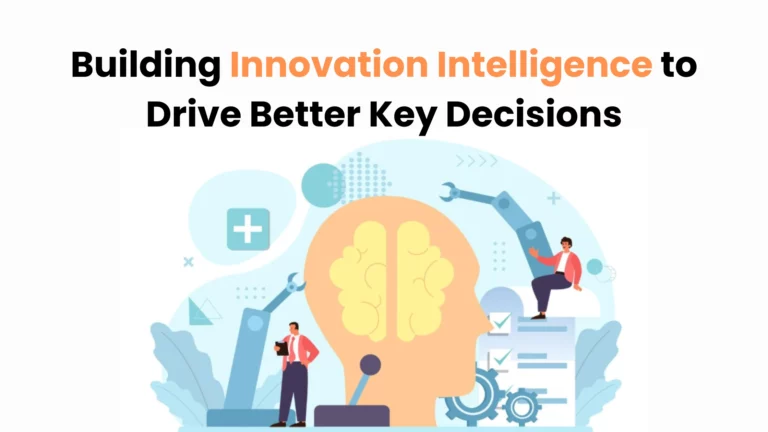
A manufacturing R&D Director recently confessed something during a conference coffee break that struck a nerve: “My team thinks I’m psychic. They expect me to know instantly which projects to fund, which markets to target, and why our innovation pipeline isn’t moving fast enough. Meanwhile, I’m drowning in spreadsheets, emails, and conflicting recommendations from five different departments.”
His situation isn’t unique. Most R&D Directors have the same problem – tons of innovation data scattered across systems, but no clear way to turn that information into confident decisions.
That’s the difference between having data and having innovation intelligence. One overwhelms you. The other empowers you to make better decisions faster.
Here’s what several successful R&D Directors have figured out: innovation intelligence isn’t about collecting more information. It’s about building systems that help you see patterns, spot opportunities, and make resource allocation decisions with confidence instead of guesswork.
When Innovation Intelligence Actually Makes the Difference
Think about your last quarterly review. How many times did executives ask questions you couldn’t answer clearly? “Which technologies should we double down on?” “How do our innovation investments compare to industry standards?” “What’s causing the delays in our pipeline?”
Without proper innovation intelligence, these conversations become uncomfortable. You end up making presentations filled with activity metrics rather than strategic insights.
Here’s where R&D Directors say better innovation intelligence changes everything:
- Portfolio decisions that stick: Instead of revisiting the same project priorities every month, you have clear criteria for evaluating ideas against business strategy, technical feasibility, and market timing. Decisions get made once and executed consistently.
- Resource conversations with teeth: When business leaders question innovation budgets, you can show exactly how resources translate into pipeline advancement, time-to-market improvements, and competitive positioning. No more defending innovation spending with generic ROI arguments.
- Early problem detection: Projects hit roadblocks, but you spot warning signals weeks before they become crises. Team velocity changes, stakeholder engagement drops, or technical milestones slip – your innovation intelligence system flags these patterns before they compound.
This isn’t theoretical. R&D Directors who’ve built these capabilities report fewer surprise project failures, faster decision cycles, and significantly less time spent in meetings rehashing the same portfolio questions.
Building Intelligence Systems That Actually Work: Key Strategies
The R&D Directors getting this right aren’t necessarily using sophisticated AI or expensive consulting projects. They’re applying structured thinking to information they already collect.
1. Getting Your Data House in Order
Most innovation information lives in random places: ideas submitted via email, evaluation notes in meeting minutes, project updates scattered across different stakeholders. This fragmentation kills innovation intelligence before it starts.
One biotech R&D Director solved this by establishing what she calls “information discipline.” Every idea submission goes through the same structured process. Every evaluation follows consistent criteria. Every project update includes the same data points.
Platforms like Idea Assist handle this automatically – structured submission forms, standardized evaluation workflows, consistent progress tracking.
The result? Instead of hunting through email chains for project status, you have comprehensive innovation intelligence in formats you can actually analyze.
2. Creating Decision Frameworks That Scale
Raw information becomes innovation intelligence when you can evaluate options consistently. This means establishing scoring systems that weigh factors like strategic alignment, technical risk, resource requirements, and market potential.
One aerospace R&D Director uses what he calls his “decision matrix approach.” Every project gets evaluated against the same eight criteria, scored by the same cross-functional team, using the same scale. As a result, portfolio discussions focus on strategic trade-offs rather than basic information gathering.
IP Assist includes customizable evaluation frameworks that let you define criteria specific to your organization’s priorities. When every idea gets evaluated against the same dimensions, patterns emerge that inform better portfolio decisions.
3. Building Pipeline Visibility That Prevents Surprises
Traditional project tracking relies on monthly status reports that quickly become outdated. By the time you identify bottlenecks or resource conflicts, momentum has already been lost.
Innovation intelligence requires real-time visibility into how projects move through development stages. One consumer goods R&D Director describes this as “early warning radar” – dashboard views that show pipeline velocity, resource allocation, and engagement indicators across the entire portfolio.
When patterns become visible, you can intervene before small issues become major problems. Team collaboration drops? Address it immediately. Resource conflicts emerging? Rebalance before projects stall. Technical milestones slipping? Adjust timelines proactively.
4. Connecting Innovation Activity to Business Results
The highest level of innovation intelligence connects innovation investments to business outcomes. This means tracking how ideas flow from submission through implementation and market impact.
A pharmaceutical R&D Director shared his approach: “We track three conversion rates – ideas to projects, projects to products, and products to revenue impact. When any of these ratios change significantly, we know something in our innovation engine needs attention.”
This kind of measurement framework builds organizational confidence in innovation investments because stakeholders can see clear connections between innovation activities and business results.
3 Innovation Intelligence Capabilities That Matter Most
After conversations with dozens of R&D Directors, three innovation intelligence capabilities consistently make the biggest difference:
Predictive Pattern Recognition
Instead of just tracking what happened, effective innovation intelligence systems help predict what’s likely to happen next. This means identifying early indicators that suggest project success or failure risk.
Look for patterns in evaluation time, stakeholder engagement levels, resource requirement changes, or technical milestone completion rates. When these indicators are tracked consistently, you can spot problems weeks before they surface in traditional status reports.
Cross-Functional Information Flow
Innovation happens at the intersection of multiple functions, but most organizations struggle to synthesize inputs from R&D, legal, business development, marketing, and operations into coherent decision support.
Successful innovation intelligence systems don’t require everyone to use the same tools, but they do ensure information flows efficiently between stakeholders without manual coordination overhead.
Strategic Alignment Monitoring
Market conditions change, priorities shift, and new opportunities emerge. Your innovation intelligence system should continuously assess how well your innovation portfolio aligns with evolving business strategy.
This isn’t about quarterly strategy reviews. It’s about ongoing monitoring that flags when portfolio adjustments are needed based on external signals or internal strategic changes.
Avoiding the Implementation Mistakes That Kill Innovation Intelligence
Several R&D Directors shared lessons from unsuccessful innovation intelligence initiatives:
- Starting too complex: Don’t build elaborate data warehouses before establishing basic information collection discipline. One director spent six months designing the “perfect” analytics system while his team continued making decisions based on incomplete information. Start with structured processes, then add analytical sophistication gradually.
- Focusing only on dashboards: Innovation intelligence isn’t just about prettier reports. It’s about creating decision-support systems that help teams take better actions faster. Metrics matter, but only if they drive different behaviors.
- Implementing standalone tools: Analytics tools that require separate data entry or management overhead often get abandoned. Look for innovation intelligence capabilities that enhance existing workflows rather than creating new administrative burdens.