Skip to content

Symphony is a comprehensive intellectual property management platform designed to help large organizations manage complex IP portfolios, from invention disclosures and patent workflows to portfolio tracking and reporting.
Particularly, those with employee sizes ranging from 1,000 to nearly 10,000.
Just take a look at their current customer demographics.
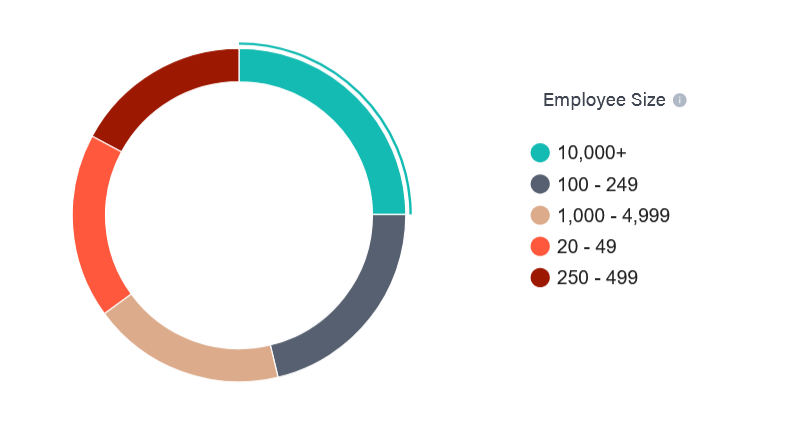
Source: 6sense
But in 2026, many organizations are asking a new question. Is a comprehensive enterprise IP platform always the right fit for every team?
As IP operations evolve, companies are looking beyond feature lists and evaluating whether their software matches their actual needs, resources, and innovation goals.
Organizations exploring Symphony alternatives often consider factors such as:
- Cost and scalability: Enterprise platforms may include capabilities that growing teams do not always need, making affordability and flexibility important considerations.
- Implementation requirements: Some organizations prefer solutions that can be adopted quickly without lengthy deployment cycles or extensive process changes.
- Ease of adoption: A powerful platform only creates value when inventors, legal teams, and business stakeholders actually use it.
- Specific workflow needs: Some teams need stronger invention capture, collaboration, analytics, or innovation management capabilities rather than a full enterprise suite.
- Flexibility: Companies increasingly look for platforms that allow them to choose workflows and capabilities that fit their operating model.
Whether you are considering replacing Symphony or evaluating IP management software for the first time, the right choice depends on your portfolio size, team structure, innovation goals, and long-term strategy.
In this guide, we compare the leading Symphony alternatives in 2026, including their features, strengths, limitations, pricing considerations, and the types of organizations they are best suited for.
What to Consider When Choosing a Symphony Alternative?
Replacing or selecting an IP management platform is not just a software decision. It affects how inventors submit ideas, how IP teams manage workflows, and how effectively an organization turns innovation into valuable intellectual property.
You shouldn’t only focus on finding a Symphony alternative that has a lower subscription price. The true cost of an IP management platform depends on implementation effort, adoption, scalability, and the value your team gets from the system over time.
A cost-effective solution should provide the capabilities your team actually needs while avoiding unnecessary complexity and overhead.
While every company has different requirements, you must evaluate these key factors when comparing Symphony alternatives in 2026.
1. Does the platform support your entire IP workflow?
No platform is perfect for every use case. So, instead of choosing based only on the number of features, identify your biggest challenge:
- Need better invention capture?
- Looking for stronger portfolio management?
- Need advanced IP analytics?
- Want improved collaboration?
- Trying to automate manual workflows?
The right alternative should solve your team’s most important problems rather than offering capabilities you may never use.
Don’t search by looking at only patent tracking and portfolio management features. Consider whether the platform supports the stages that matter most to your team:
- Idea capture and innovation intake
- Invention disclosure management
- Review and approval workflows
- Prior art evaluation
- Patent portfolio tracking
- Reporting and analytics
- Collaboration between inventors, legal teams, and business stakeholders
A platform that supports your complete workflow can reduce disconnected processes and manual handoffs.
Check out our free comparison guide: IP Management Software Comparisons Template
2. How easy is it for inventors and internal teams to adopt?
An IP management system is only valuable if people actually use it. IP software is often used by more than just IP professionals. Inventors, engineers, researchers, business teams, and leadership may all interact with the platform.
Many organizations struggle with low inventor participation because submitting ideas feels time-consuming or complicated.
When comparing solutions, evaluate:
- User experience for non-IP employees
- Ease of submitting invention disclosures
- Collaboration capabilities
- Training requirements
- Time required for onboarding
- Timelines and tracking pipelines
Higher adoption means more visibility into potential innovations.
3. Does it match your organization’s size and complexity?
The best IP platform for a global enterprise may not be the best choice for a growing company. And if you choose a platform that takes months to deploy, it can delay the benefits your team expects from the investment.
Consider:
- Does the platform enable unlimited inventors and users?
- Will the platform scale as the size of your portfolio grows without overheads?
- How long does implementation typically take?
- How much internal IT or administrative support is required?
- Can teams begin using core workflows quickly?
- How much customization is needed before launch?
- What are the number of jurisdictions you operate in?
A solution should provide the capabilities you need today while allowing room for future growth.
Check out: Invention Disclosure Maturity Benchmark™
4. What role does AI play in the platform?
AI is becoming an important consideration in IP management, but not all AI capabilities solve the same problems.
Organizations should look beyond AI features added for marketing purposes and evaluate how AI actually supports their workflows.
Useful AI applications can include:
- Helping inventors refine ideas
- Supporting early innovation evaluation
- Improving prior art discovery
- Reducing repetitive administrative work
- Providing better insights from IP data
The most valuable AI capabilities are those that improve decision-making before significant time and resources are invested.
Related Read: Who Offers AI-Powered Features in Innovation Software? [2026 Comparison]
5. Does the cost align with the value you receive?
Software cost is not only the subscription price. Understanding the total investment upfront helps organizations make better software decisions.
Look beyond the initial subscription cost and evaluate:
- What features are included?
- Are important capabilities and modules available in the subscription or only as add-ons?
- How does pricing change as users, inventors, or portfolios grow?
- Are implementation and support costs clearly defined?
The goal is finding a platform that delivers the right capabilities without paying for functionality your team will not use. That means transparent pricing and predictable costs.
Consider additional factors such as:
- Data migration
- Training
- Ongoing administration
- Workflow customization
- Internal resources required to manage the system
With these criteria in mind, let’s compare the leading Symphony alternatives in 2026 and where each platform fits best.
Check out this free IP Budgeting Template
6. Is the pricing going to scale as your IP program grows?
Your software needs will change as your organization grows. Evaluate whether the platform pricing is going to scale with:
- More inventors
- Additional users
- Larger portfolios
- New business units
- Expanding innovation programs
And not just if the pricing is going to increase, but also by how much.
Preferrably, pick a solution that does not become expensive or restrictive in the long term. For example, InspireIP’s pricing strategy is built to make sure the number of inventors, users, and business units are unlimited.
Everyone gets to participate in your IP program without costs.
7. How do real user feedback and market validation fare?
Before selecting an IP management platform, look beyond vendor claims.
Review:
- User ratings
- Customer feedback
- Case studies
- Product reviews on platforms such as G2 and Capterra
Real user experiences can reveal important details about usability, support quality, implementation experience, and long-term satisfaction.
Once you understand what makes an IP management platform truly cost-effective, comparing Symphony alternatives becomes much easier.
Symphony Alternatives Comparison: Which IP Management Platform Fits Your Needs?
The best Symphony alternative depends on what your organization is trying to improve.
Some companies need enterprise-grade IP portfolio management. Others are looking for easier adoption, stronger innovation workflows, better analytics, or a more flexible platform that grows with their team.
Here is a quick comparison of leading Symphony alternatives in 2026:

And here are your quick takeaways, choose:
- InspireIP if you need: A platform that helps you capture ideas, manage invention disclosures, support innovation programs, and build an IP process from the earliest stages.
PatSnap if your priority is competitive intelligence, patent analytics, and technology strategy.
Anaqua if you need established enterprise IP operations and workflow management.
FoundationIP if you want a modern cloud-based alternative for complex IP lifecycle management.
Equinox Corporate if you want Salesforce-based flexibility combined with IP service integrations.
AppColl if you need affordable invention management and docketing without unnecessary complexity.
Inteum if your organization focuses on research commercialization, licensing, and technology transfer.
The right choice depends on whether your priority is portfolio administration, innovation management, analytics, collaboration, or overall IP workflow efficiency.
1. InspireIP: Best for Improving Innovation Intake and IP Workflows
Best for: Growing companies, innovation-driven organizations, startups, SMEs, and IP teams looking to improve invention capture and early-stage IP workflows.
For many organizations, the biggest IP challenge does not start with patent tracking or portfolio management.
It starts much earlier:
How do you get employees to submit better ideas, capture inventions consistently, and identify valuable innovations before they get lost?
This is where InspireIP takes a different approach from traditional IP management platforms.
Instead of replacing the systems teams already use for patent prosecution and portfolio management, InspireIP strengthens the innovation intake layer that feeds those systems.
Organizations can continue using their existing IP tools while using InspireIP to improve:
- Employee idea capture
- Invention disclosure quality
- Inventor collaboration
- Early-stage invention evaluation
- Prior art assessment before significant resources are invested
What InspireIP Does?
InspireIP helps transform raw invention ideas into structured, attorney-ready disclosures through guided, AI-assisted workflows.
Instead of asking inventors to complete complex forms without context, InspireIP guides them through the disclosure process conversationally. It helps employees explain their ideas clearly without needing to understand IP terminology or legal requirements.
The result is higher-quality invention submissions and a smoother process for both inventors and IP teams.
Key Capabilities

How InspireIP Compares as a Symphony Alternative?

Pricing and Implementation
InspireIP offers transparent, scalable pricing designed for organizations that need powerful innovation and IP workflows without the cost structure of traditional enterprise platforms.
Implementation timelines vary based on organization requirements, integrations, and workflow customization.
Why Companies Choose InspireIP?
InspireIP is a strong fit for organizations that want to:
- Increase inventor participation
- Improve invention disclosure quality
- Reduce manual intake processes
- Evaluate ideas earlier
- Build a scalable innovation pipeline
For companies evaluating Symphony alternatives, InspireIP offers a different approach. You improve the quality of innovation entering your IP system before spending significant resources on prosecution and portfolio management.
Related Read: InspireIP Case Studies
2. PatSnap: Best for IP Intelligence and Data-Driven Innovation Decisions
Best for: Organizations that need advanced patent analytics, competitive intelligence, and technology landscape insights.
Not every IP challenge is about managing workflows. For many organizations, the bigger challenge is understanding where technology is moving, how competitors are innovating, and where future opportunities or risks may exist.
This is where PatSnap stands out.
While platforms like Symphony focus heavily on managing IP operations and portfolios, PatSnap focuses on helping teams make smarter strategic decisions through patent data, analytics, and innovation intelligence.
What PatSnap Does?
PatSnap combines patent data, analytics, and competitive intelligence tools to help organizations understand innovation trends and make informed R&D and IP strategy decisions.
Teams can use PatSnap to:
- Analyze patent landscapes
- Monitor competitor activity
- Identify emerging technologies
- Evaluate innovation trends
- Support R&D and commercialization decisions
For companies operating in competitive industries, these insights can help answer important questions:
- Where are competitors investing?
- Which technology areas are becoming crowded?
- Where are potential white spaces for innovation?
- How should resources be allocated?
Where PatSnap Stands Out?

How PatSnap Compares as a Symphony Alternative?

Pricing
PatSnap uses a subscription-based pricing model that varies based on selected capabilities, users, and organizational requirements.
Compared with traditional enterprise IP management platforms, it can provide a more focused investment for organizations primarily looking for patent intelligence and analytics.
Best Scenario for Choosing PatSnap
PatSnap is a strong fit if your primary goal is:
- Competitive patent analysis
- Technology landscape research
- R&D intelligence
- Innovation trend monitoring
- Strategic IP decision-making
However, companies looking primarily for invention capture, employee idea submission, or end-to-end IP workflow management may need a platform designed specifically for those processes.
For organizations evaluating Symphony alternatives, PatSnap represents a data-driven approach: use deeper innovation intelligence to make better IP and R&D decisions.
3. Anaqua: Best for Enterprise IP Operations and Complex Portfolio Management
Best for: Large enterprises, law firms, and organizations that need mature IP operations, advanced workflows, and robust portfolio management capabilities.
When companies look for a Symphony alternative, Anaqua is often one of the platforms they consider because it operates in a similar space: helping organizations manage complex intellectual property operations at scale.
While lighter platforms focus on specific challenges like invention capture or analytics, Anaqua is built for organizations managing sophisticated IP workflows, including patent and trademark portfolios, legal collaboration, docketing, and reporting.
What Anaqua Does?
Anaqua provides IP management solutions designed to help organizations centralize their intellectual property processes.
Its platform supports:
- Patent and trademark portfolio management
- IP docketing and deadline tracking
- Invention disclosure workflows
- Budget and cost management
- Reporting and analytics
- Collaboration between internal IP teams and external counsel
Anaqua also offers PATTSY WAVE, a solution designed for teams that want a more streamlined docketing experience with an intuitive interface.
Where Anaqua Stands Out?

How Anaqua Compares as a Symphony Alternative?

Pricing
Anaqua uses a customized pricing model based on factors such as organization size, selected modules, users, portfolio requirements, and implementation needs.
For enterprise organizations with complex IP operations, the investment may be justified by the ability to centralize workflows, improve visibility, and reduce administrative burden.
Best Scenario for Choosing Anaqua
Anaqua is a strong fit if your organization needs:
- Enterprise-level IP portfolio management
- Complex patent and trademark workflows
- Advanced docketing capabilities
- Collaboration with outside counsel
- Scalable IP operations across business units
However, organizations primarily looking to increase employee innovation participation, simplify invention intake, or build an innovation pipeline may benefit from platforms designed specifically for those early-stage workflows.
For companies evaluating Symphony alternatives, Anaqua represents the enterprise operations approach: a powerful platform for managing complex IP processes at scale.
4. FoundationIP by Clarivate: Best for Modern Cloud-Based IP Lifecycle Management
Best for: Organizations that need comprehensive patent and trademark management with modern cloud architecture and integrated IP data capabilities.
For companies looking for a true Symphony alternative, FoundationIP is one of the platforms worth evaluating.
Built by Clarivate, FoundationIP is designed to help IP teams manage the complete lifecycle of intellectual property — from invention capture and prosecution through portfolio management and reporting.
Where some organizations look for lighter solutions to solve specific workflow challenges, others need a robust IP operations platform that can support complex portfolios and global teams.
What FoundationIP Does?
FoundationIP provides cloud-based IP management capabilities for patent, trademark, and other intellectual property workflows.
Teams can use the platform to manage:
- Patent and trademark portfolios
- Invention disclosures
- Prosecution workflows
- Docketing and deadlines
- IP reporting and analytics
- Collaboration between IP teams and stakeholders
Its integration with Clarivate’s IP data ecosystem can also provide teams with access to additional intelligence and information to support IP decision-making.
Where FoundationIP Stands Out?

How FoundationIP Compares as a Symphony Alternative?

Pricing
FoundationIP pricing is typically customized based on factors such as portfolio size, users, modules, integrations, and organizational requirements.
Companies evaluating FoundationIP should consider not only subscription costs but also implementation, migration, configuration, and ongoing administration requirements.
Best Scenario for Choosing FoundationIP
FoundationIP is a strong fit if your organization needs:
- A modern IP lifecycle management platform
- Patent and trademark portfolio management
- Strong prosecution and docketing workflows
- Cloud-based infrastructure
- Integration with established IP data resources
However, teams whose biggest challenge is increasing inventor participation, improving early idea capture, or creating a more innovation-focused intake process may need additional capabilities beyond traditional IP lifecycle management.
For organizations evaluating Symphony alternatives, FoundationIP represents the modern enterprise approach: comprehensive IP management with cloud-based flexibility and strong data capabilities.
5. Equinox Corporate by Questel: Best for Salesforce-Based IP Management and Integrated IP Services
Best for: Organizations looking for a customizable IP management platform with strong workflow automation and access to integrated IP services.
For companies evaluating Symphony alternatives, Equinox Corporate offers a different approach to IP management.
Built on the Salesforce platform, Equinox Corporate combines IP lifecycle management capabilities with the flexibility of a widely used enterprise technology ecosystem.
This can make it appealing for organizations that want more customization options while maintaining a structured IP workflow environment.
What Equinox Corporate Does?
Equinox Corporate helps organizations manage intellectual property processes across patents, trademarks, designs, and other IP assets.
The platform supports:
- Patent and trademark portfolio management
- Invention disclosure workflows
- IP docketing and deadline tracking
- Automated workflows and notifications
- Reporting and analytics
- Collaboration between IP teams and stakeholders
Through Questel’s broader IP services ecosystem, organizations can also connect IP management with services such as filing support, annuity management, translation, and other IP-related activities.
Where Equinox Corporate Stands Out?

How Equinox Corporate Compares as a Symphony Alternative?

.
Pricing
Equinox Corporate pricing is typically customized based on factors such as portfolio size, users, modules, integrations, and organizational requirements.
Organizations evaluating Equinox should consider both software costs and the potential value of integrated IP services within the Questel ecosystem.
Best Scenario for Choosing Equinox Corporate
Equinox Corporate is a strong fit if your organization needs:
- A customizable IP management platform
- Patent and trademark workflow management
- Salesforce-based flexibility
- Automated IP processes
- Integration with IP service providers
However, teams primarily looking for lightweight invention capture, faster adoption, or employee-driven innovation workflows may prefer platforms designed specifically around those needs.
For organizations evaluating Symphony alternatives, Equinox Corporate represents the flexible enterprise approach: a customizable IP management platform connected to a broader IP services ecosystem.
6. AppColl: Best for Affordable IP Management Without Enterprise Complexity
Best for: Small and mid-sized IP teams, startups, law firms, and organizations looking for a simpler way to manage invention workflows, docketing, and IP operations.
Not every organization needs a large enterprise IP management platform.
For smaller teams, the challenge is often not managing thousands of global IP assets — it is building structured processes without adding unnecessary complexity, implementation effort, or cost.
This is where AppColl stands out.
AppColl provides cloud-based IP management tools that combine invention management, docketing, workflow automation, and document organization in a more lightweight platform.
What AppColl Does?
AppColl helps organizations manage key IP workflows, including:
- Invention disclosure intake
- Patent and trademark docketing
- Document management
- Workflow automation
- Collaboration with inventors and stakeholders
- Reporting and portfolio visibility
By combining invention management and docketing capabilities in one platform, AppColl can help smaller teams avoid managing multiple disconnected tools.
Where AppColl Stands Out?

How AppColl Compares as a Symphony Alternative?

Pricing
AppColl offers pricing options designed for smaller organizations and teams that need predictable IP management costs.
Pricing depends on selected modules, users, and organizational requirements. Organizations should evaluate the overall cost based on required workflows rather than subscription price alone.
Best Scenario for Choosing AppColl
AppColl is a strong fit if your organization needs:
- Simple invention disclosure management
- Patent and trademark docketing
- Workflow automation
- Affordable IP operations software
- A platform that is easier to manage than enterprise systems
However, companies with highly complex global IP operations or advanced enterprise requirements may need a more comprehensive platform.
For organizations evaluating Symphony alternatives, AppColl represents the practical approach: get the essential IP workflows you need without investing in enterprise-level complexity.
7. Inteum: Best for Research Institutions and Technology Transfer Management
Best for: Universities, research institutions, government labs, and organizations managing innovation from invention disclosure through licensing and commercialization.
For many research-driven organizations, intellectual property management is not only about patents and portfolio tracking.
The process often begins much earlier — with researchers discovering new technologies, submitting invention disclosures, evaluating opportunities, filing patents, and eventually commercializing those innovations through licensing or partnerships.
This is where Inteum stands out.
Unlike traditional IP management platforms built primarily around corporate patent operations, Inteum is designed around the complete technology transfer lifecycle.
What Inteum Does?
Inteum helps organizations manage innovation from initial disclosure through commercialization.
Its platform supports:
- Invention disclosure management
- Researcher and inventor collaboration
- Technology evaluation
- Patent tracking
- Licensing management
- Agreement management
- Royalty tracking
- Commercialization reporting
This makes it particularly relevant for organizations where the goal is not only protecting intellectual property, but also moving discoveries from research environments into real-world applications.
Where Inteum Stands Out?

How Inteum Compares as a Symphony Alternative?

Pricing
Inteum pricing is typically customized based on organizational requirements, selected modules, users, and workflow complexity.
For universities and research institutions, the value often comes from consolidating multiple technology transfer processes into a single system.
Best Scenario for Choosing Inteum
Inteum is a strong fit if your organization needs:
- Research invention management
- Technology transfer workflows
- Licensing and commercialization tracking
- Researcher collaboration
- Innovation portfolio reporting
However, organizations primarily focused on enterprise patent prosecution, corporate IP operations, or large commercial patent portfolios may find other platforms better aligned with their needs.
For organizations evaluating Symphony alternatives, Inteum represents the research-driven approach: managing innovation from discovery to commercialization, not just from patent filing onward.
Frequently Asked Questions
What is the best alternative to Symphony IP management software?
The best Symphony alternative depends on your organization’s specific needs.
- InspireIP is a strong choice for companies looking to improve invention capture, disclosure workflows, and early-stage innovation management.
- PatSnap is better suited for organizations needing patent intelligence and competitive analysis.
- Anaqua, FoundationIP, and Equinox Corporate are better fits for organizations seeking enterprise-level IP lifecycle management.
- AppColl is a good option for smaller teams looking for affordable IP workflows.
- Inteum is designed for universities and research organizations managing technology transfer and commercialization.
There is no single replacement that works best for every organization; the right choice depends on your IP processes, portfolio complexity, and business goals.
Why are companies looking for Symphony alternatives?
Organizations evaluate Symphony alternatives for several reasons, including:
- High enterprise costs
- Long implementation timelines
- Complex configurations
- Difficulty driving user adoption
- Paying for features they do not need
Many companies are looking for more focused platforms that solve specific IP challenges without unnecessary complexity.
Is Symphony only suitable for large enterprises?
Symphony is primarily designed for organizations with complex IP portfolios, global operations, and dedicated IP teams.
Smaller companies or organizations with simpler workflows may find that a more focused platform provides better value, especially if their main needs are invention capture, collaboration, or streamlined IP processes.
Can I replace Symphony without changing my entire IP workflow?
Yes. Depending on your goals, you may not need a complete system replacement.
Some organizations use specialized platforms alongside existing IP management systems to improve specific areas such as:
- Invention disclosure intake
- Employee innovation participation
- IP analytics
- Collaboration workflows
For example, a company may continue using an enterprise IP management system for prosecution and portfolio tracking while improving the innovation intake process with a dedicated solution.
What should I consider before switching from Symphony?
Before replacing Symphony, evaluate:
- Your current IP workflows
- Data migration requirements
- Integration needs
- User adoption challenges
- Implementation timelines
- Total cost of ownership
- Future scalability
A successful transition depends on selecting a platform that matches how your organization actually manages intellectual property.
Are Symphony alternatives cheaper?
Some alternatives may have lower costs depending on the organization’s size, required features, and implementation needs.
However, cost should not be the only deciding factor. A platform that improves adoption, reduces manual work, and better fits your workflows can provide more value over time.
What is the difference between Symphony alternatives and IP management add-on tools?
Traditional IP management platforms typically focus on managing existing IP assets, prosecution workflows, docketing, and portfolios.
Specialized tools may focus on improving specific stages of the innovation process, such as:
- Idea capture
- Invention disclosures
- Prior art evaluation
- IP analytics
- Collaboration
Many organizations combine both approaches to create a more effective end-to-end IP process.
How long does it take to implement a Symphony alternative?
Implementation time depends on the platform, organization size, integrations, and data migration requirements.
Simpler cloud-based solutions may be deployed faster, while enterprise IP platforms often require more planning, configuration, and training.
Making Your Decision
There is no single “best” Symphony alternative. The right choice depends on what your organization needs most.
Before making a decision, ask:
- Are you replacing your entire ip system or solving a specific bottleneck?
- How complex is your ip operation or what is your team’s maturity level?
- Who will actually use the platform?
- What is the total cost beyond the subscription?
- Do you need a platform that grows with you?
Not sure whether you need a Symphony replacement or a solution to improve a specific part of your IP workflow?